Why Does Pyeongyang Naengmyeon Taste So Restrained?
Pyeongyang Naengmyeon is built on buckwheat and cold broth rather than strong seasoning, so it can taste restrained at first. That restraint is not a lack of flavor but a balance, and we hold the broth at every branch to a standard of 1.0% salinity and 12°C.
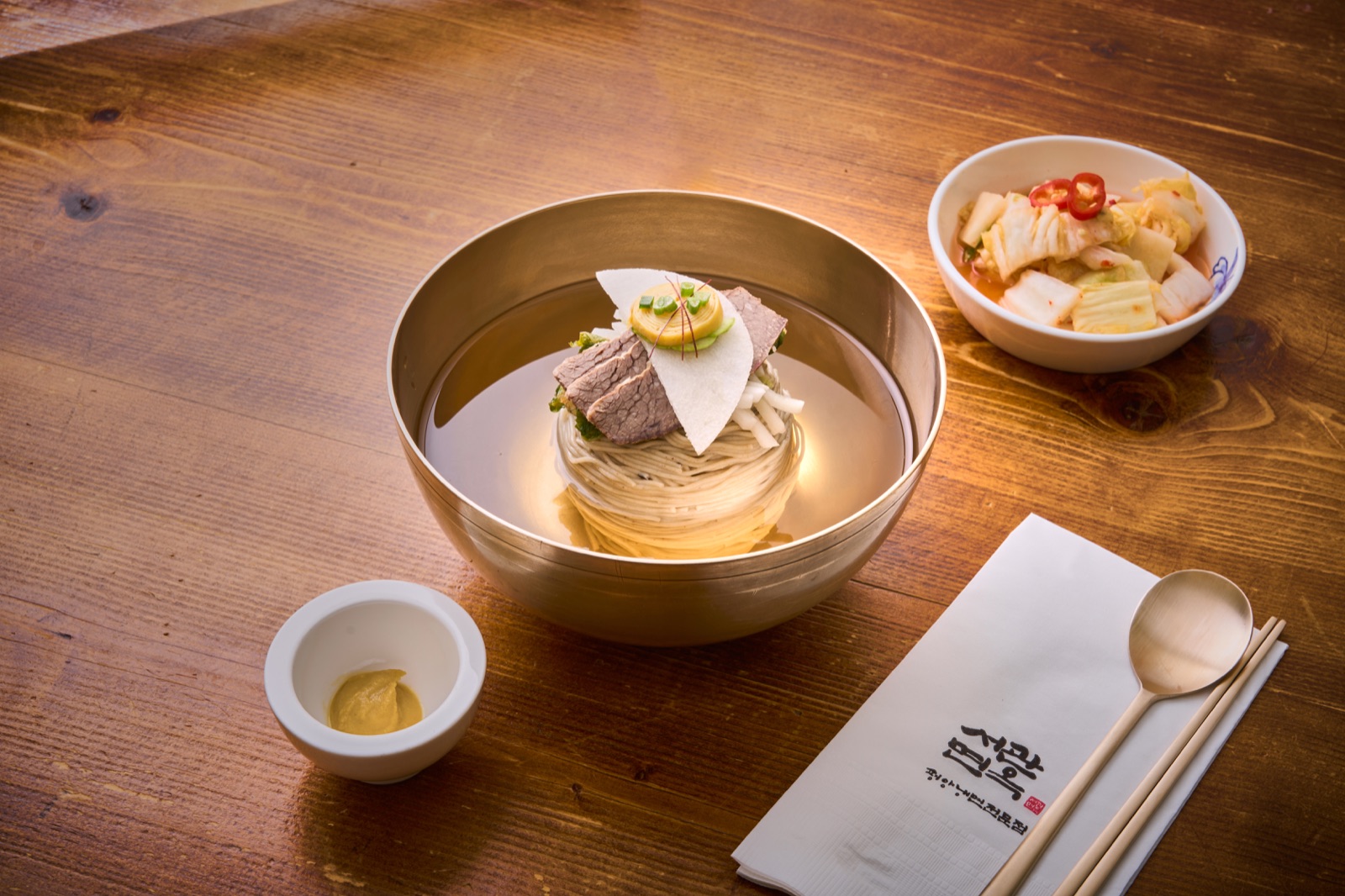
The first time you eat Pyeongyang Naengmyeon, you may find that it tastes cleaner and lighter than you expected.
That is all the more likely if you are used to dishes where strong seasoning or salt comes through first. The clean, light character of Pyeongyang Naengmyeon is not a lack of flavor, though. It is closer to a balance, one that lets you taste the delicate flavors of the buckwheat and the broth at the same time. Rather than leave that balance to the senses alone, we hold the Pyeongyang Naengmyeon broth at every branch to a standard of 1.0% salinity and 12°C.
Cold Changes How Salty Something Tastes
Flavor is not decided by salinity alone. At the same salinity, how salty something tastes can change with temperature. A dish eaten cold, as Pyeongyang Naengmyeon is, registers differently from a hot soup. So it matters to keep steady not only the salinity of the broth but also the temperature at which it reaches you.
That is why we manage the salinity and the temperature of the broth together.
1.0% and 12°C, Two Numbers That Hold the Flavor
The standard for our Pyeongyang Naengmyeon broth is 1.0% salinity and 12°C.
A broth that is too salty covers the aroma of the buckwheat, and one that is underseasoned makes it hard to reach the depth the Hanwoo (Korean beef) broth carries. A broth that is too cold can also close off its own flavor, so we look for the balance where the aroma of the buckwheat and the beefy depth of the Hanwoo broth come through together. These two numbers are not simply cooking figures. They are the standard that lets us set down a bowl that tastes like Seogwanmyeonog wherever you eat it.
Clean and Light Rather Than Watery
The Pyeongyang Naengmyeon we work toward is not a dish that arrives with force on the first taste.
Take a sip of the broth first, then eat it together with the buckwheat noodles. The nutty aroma of the buckwheat joins the depth of the Hanwoo broth, and after a few mouthfuls the grain of the flavor comes into focus a little more clearly than it did at the start. Looking for the flavor the buckwheat and the broth already hold, rather than adding a stronger one, is another way to enjoy how clean and light Pyeongyang Naengmyeon is.
If you are curious about the story beyond salinity and temperature, you can find more of the culture around Pyeongyang Naengmyeon at Seogwanmyeonog on Instagram.
Frequently Asked Questions
- What is the salinity of the Pyeongyang Naengmyeon broth at Seogwanmyeonog?
- Every branch works to a standard of 1.0% salinity.
- What temperature is the broth served at?
- We work to a standard of 12°C. By holding the temperature steady as well as the salinity, we aim to carry the flavor and aroma of the broth in balance.
- Is Pyeongyang Naengmyeon meant to taste this restrained?
- It is a dish centered on the buckwheat and the broth themselves rather than on strong seasoning or salt, so it can taste clean and light at first. Tasting the noodles and the broth together, slowly, brings out the aroma of the buckwheat and the depth of the Hanwoo broth.
References
- Press coverage on Pyeongyang Naengmyeon salinity (Segye Ilbo, July 2020)
- Seogwanmyeonog menu stories (/en/story)