How Do Pyeongyang and Hamheung Naengmyeon Differ?
Pyeongyang Naengmyeon and Hamheung Naengmyeon are the two bowls most often compared, and the difference starts with the noodles. Pyeongyang Naengmyeon centers on buckwheat noodles in cold broth, Hamheung Naengmyeon on starch noodles from potato or sweet potato with a spicy dressing.
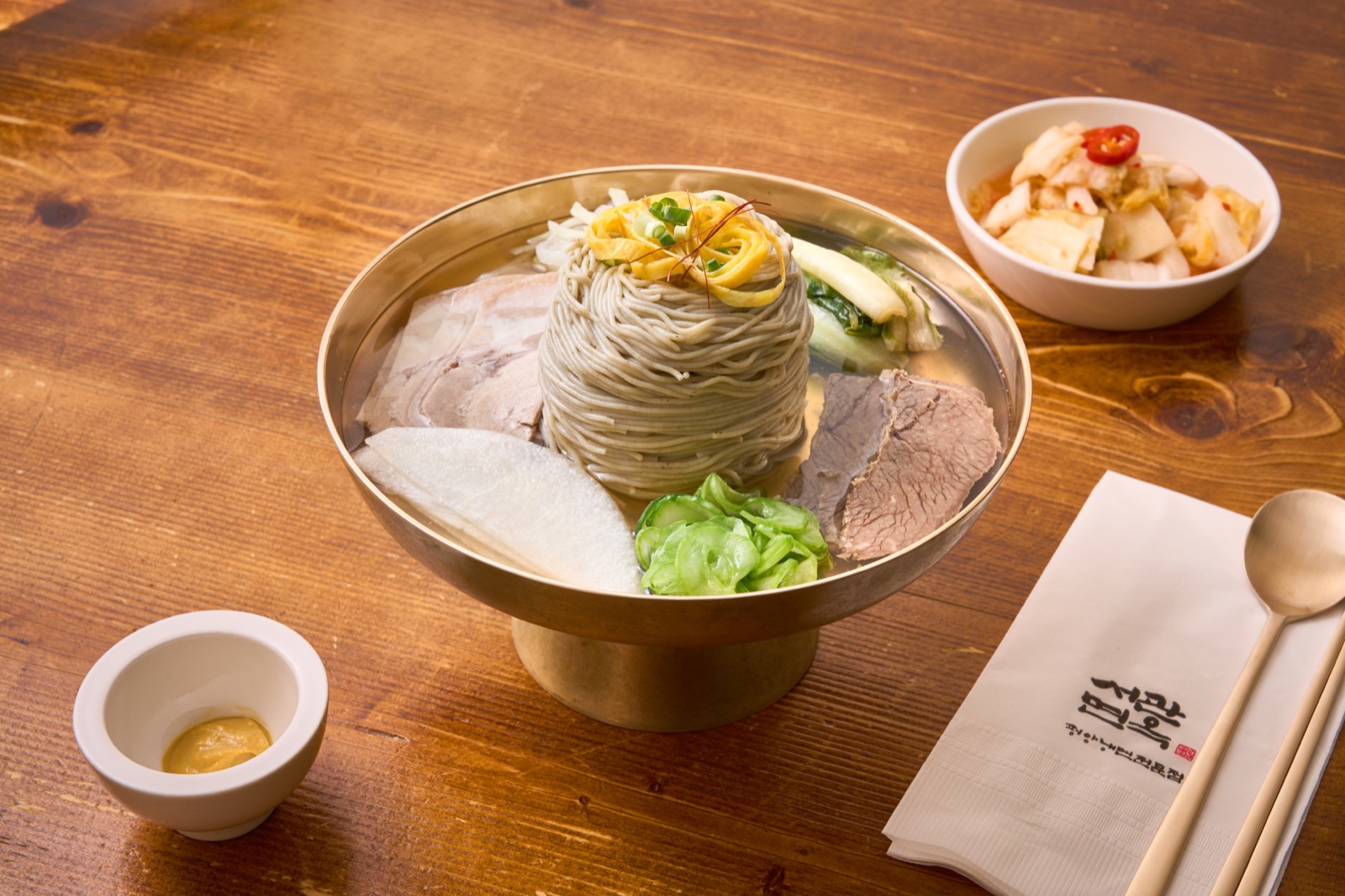
Pyeongyang Naengmyeon and Hamheung Naengmyeon are the two bowls most often set side by side when naengmyeon comes up.
The difference between them starts with what the noodles are made of. Pyeongyang Naengmyeon is known for noodles built around buckwheat in a cold broth, Hamheung Naengmyeon for noodles made from potato or sweet potato starch with a spicy dressing. With different ingredients come clearly different textures, and different ways of enjoying the flavor.
The Biggest Difference Is the Noodle
Buckwheat sits at the center of Pyeongyang Naengmyeon.
Rather than the firm chew of wheat or starch noodles, buckwheat is marked by its own aroma and a soft texture. Hamheung Naengmyeon, by contrast, uses starch as its main ingredient, which gives the noodles a strong spring and a chewy bite. Buckwheat noodles, though, do not have to snap apart. We mill 100% Jeju buckwheat finely and handle the noodle-making with care, so the aroma of 100% buckwheat stays while the noodles keep a certain spring and bite.
Broth and Seasoning Work Differently Too
Pyeongyang Naengmyeon is typically served as noodles in a cold beef broth. What you enjoy is the balance the buckwheat and the broth reach, rather than a strong seasoning. Hamheung Naengmyeon is widely known in the form of starch noodles, kneaded from potato or sweet potato starch, tossed with a spicy dressing. The firm spring of the noodles meeting the flavor of the dressing is what marks it. So while the two share a regional lineage and the name naengmyeon, each shows its own character, Pyeongyang Naengmyeon in the buckwheat and the broth, Hamheung Naengmyeon in the spring of the starch noodles and the dressing.
Seogwanmyeonog Follows the Pyeongyang Way
Seogwan is the old name that was used for the Pyeongan region in the Joseon period. As the name suggests, Seogwanmyeonog starts from the noodle culture of Pyeongan. We mill 100% Jeju buckwheat on a millstone every morning, make the noodles the same day, and set them in a deep Hanwoo (Korean beef) broth to complete our Pyeongyang Naengmyeon. We do not hold tradition to a single form, though. We also serve naengmyeon that lets you enjoy 100% buckwheat noodles in other ways, such as Goldong Naengmyeon, with mushrooms and whole perilla seeds garnishing noodles dressed in cold-pressed perilla oil and soy sauce, and Seonbi Naengmyeon, with a spicy dressing and ground sesame.
Frequently Asked Questions
- What is the biggest difference between Pyeongyang Naengmyeon and Hamheung Naengmyeon?
- The noodles and the way the flavor is built. Pyeongyang Naengmyeon pairs buckwheat noodles with a clean, light broth so that the ingredients themselves come through, while Hamheung Naengmyeon adds a spicy dressing to starch noodles made from potato or sweet potato, for a stronger, sharper flavor and a chewy texture.
- Is Pyeongyang Naengmyeon always in broth and Hamheung Naengmyeon always dressed?
- That is an easy way to picture the two best known forms, but it is not quite the same thing. Pyeongyang has its own tradition of noodles tossed with a dressing, and at Seogwanmyeonog we serve 100% buckwheat noodles that way too, in Goldong Naengmyeon and Seonbi Naengmyeon.
- Is it normal for 100% buckwheat noodles to break easily?
- They are softer than wheat or starch noodles, but they do not have to snap apart. With fine milling and careful noodle-making, we keep a certain spring and bite even in noodles that are 100% buckwheat.
References
- Seogwanmyeonog menu stories (/en/story)