What Goes Into the Broth? 3 Hours and 1.0% Salinity
Two things decide the taste of Pyeongyang Naengmyeon, the buckwheat noodles and the broth. We mill and cut 100% Jeju buckwheat the same day, then add a clear broth drawn from Hanwoo (Korean beef). Rather than strong seasoning, we look for the beef aroma and the scent of the buckwheat to meet.
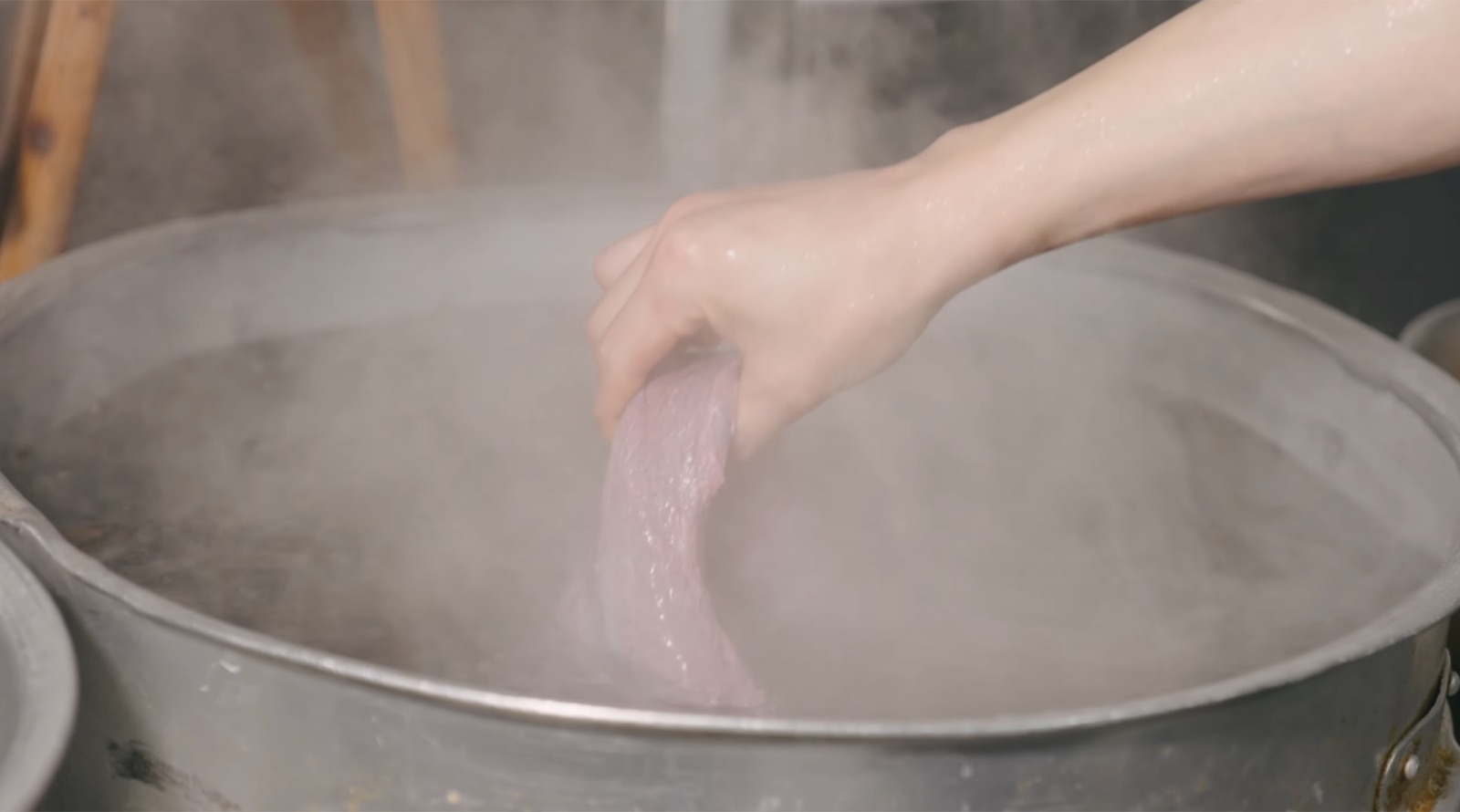
Two things decide the taste of Pyeongyang Naengmyeon, the buckwheat noodles and the broth. At Seogwanmyeonog we mill and cut 100% Jeju buckwheat the same day to make the noodles, then add a clear broth drawn deeply from Hanwoo (Korean beef) to complete a bowl of Pyeongyang Naengmyeon. Rather than strong seasoning or a sharp taste, we look for the beef aroma of the Hanwoo and the scent of the buckwheat to meet each other. That is the direction we hold to in our Pyeongyang Naengmyeon broth.
A Clear, Deep Broth Made with Hanwoo
Our Pyeongyang Naengmyeon broth takes its taste from Hanwoo. We use only domestic Hanwoo slaughtered within 3 days, simmer it for 3 hours to draw out a full beef aroma, and strain it through cotton cloth into a clear broth. It is seasoned with good soy sauce and sea salt, and every branch holds a salinity of 1.0%. We make the naengmyeon with broth aged for one day at 12°C, and any broth left after that is not used.
We finish it clear and light so that it does not cover the scent of the buckwheat. What matters to us is the balance in which the two tastes carry into each other when the broth is eaten with the buckwheat noodles, more than when the broth is tasted on its own.
Do You Mix In Dongchimi?
We use only Hanwoo broth. Our broth is built around beef broth made from Hanwoo. Pyeongyang Naengmyeon is hard to define by a single recipe, because homes and restaurants either mix meat broth with dongchimi (radish water kimchi) or draw their broth from different ingredients and methods. Among those ways, we build our own Pyeongyang Naengmyeon taste around the deep, clean beef aroma that Hanwoo carries.
Why Is the Broth Light?
We keep the taste of the broth from running too far ahead of the noodles. The scent of noodles made from 100% Jeju buckwheat and the Hanwoo broth have to carry into each other in one bowl rather than cover each other. At first it may taste light, but tasting it slowly together with the noodles brings out the nutty scent of the buckwheat alongside the deep beef aroma of the Hanwoo. That is the role we want the broth of Pyeongyang Naengmyeon to play.
Keeping the Same Taste Is Also a Standard for the Broth
Pyeongyang Naengmyeon is a dish where the impression of a bowl shifts a great deal with the state of the broth, not only with the ingredients. So that the balance made by Hanwoo broth and Jeju buckwheat can be met at whichever branch you visit, we manage the taste and quality of the broth to the same standard across all branches. It is served as Hanwoo broth at a salinity of 1.0%, aged for one day at 12°C.
Frequently Asked Questions
- What is the Seogwanmyeonog naengmyeon broth made from?
- It is a clear, deep broth built around fresh Hanwoo slaughtered within 3 days. We balance it so that you can taste the beef aroma of the Hanwoo without covering the scent of the buckwheat.
- Do you mix in dongchimi broth?
- No. At Seogwanmyeonog we use only pure meat broth made from Hanwoo.
- Does the broth taste different at each branch?
- All branches manage the taste and quality of the broth to the same standard, so the taste of Seogwanmyeonog Pyeongyang Naengmyeon can be met at any branch.
References
- Seogwanmyeonog menu stories (/en/story)