Your First Pyeongyang Naengmyeon: Where to Start
Pyeongyang Naengmyeon is buckwheat noodles in a clear Hanwoo (Korean beef) broth, and a first bowl raises the question of where to begin. There is no set method, but on a first visit we suggest tasting the broth and the buckwheat as they are, then adding vinegar and mustard.
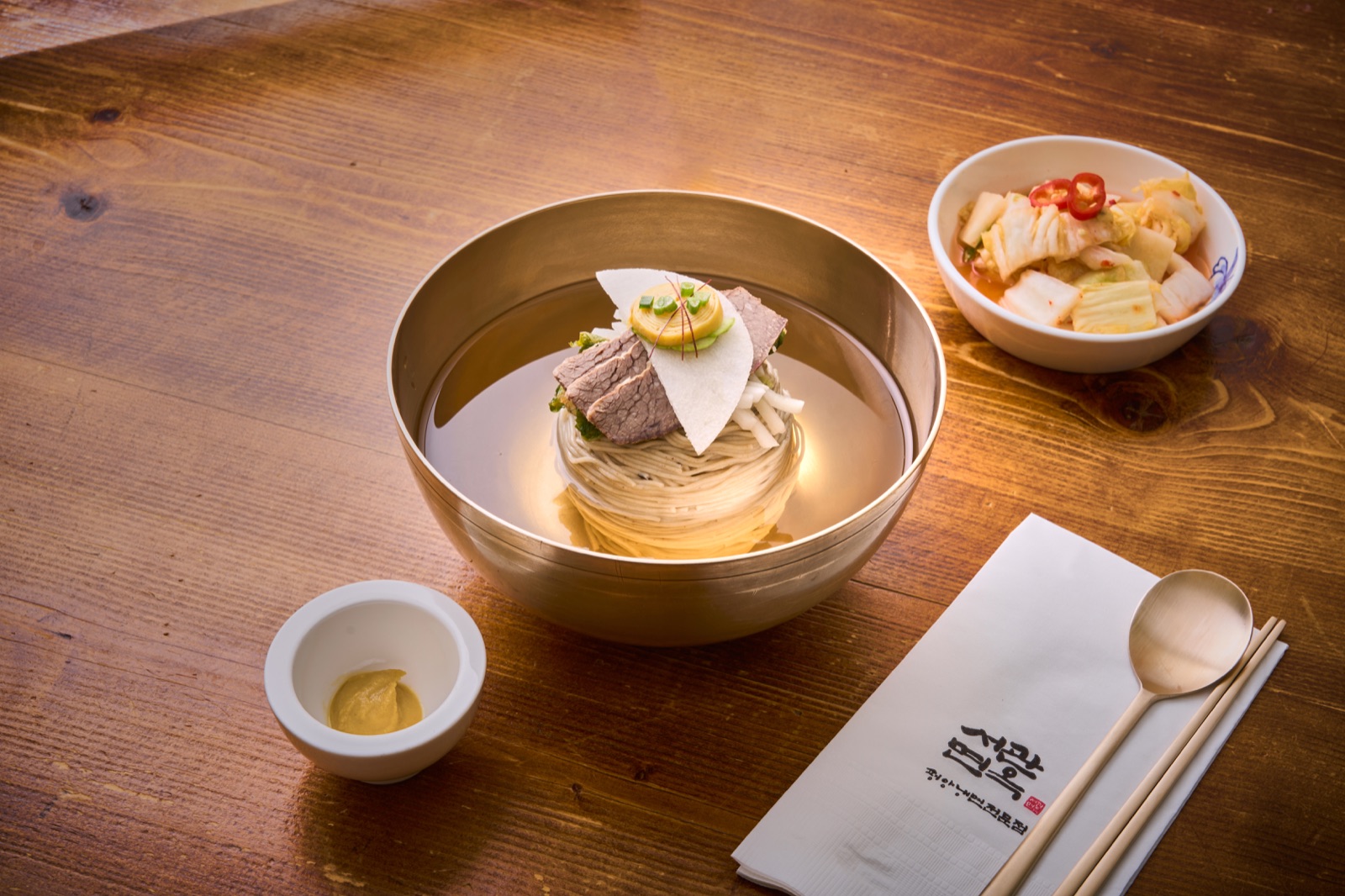
When a bowl of Pyeongyang Naengmyeon arrives for the first time, you may pause for a moment over how to eat it. Whether to add vinegar and mustard first, whether to loosen the noodles, whether to start with the broth. It is not a dish with a set method, but if this is your first Pyeongyang Naengmyeon with us, we recommend taking your time with the flavors the broth and the buckwheat already have.
First, Taste the Broth
Before you loosen the noodles or add vinegar and mustard, take a spoonful or two of the broth.
Our Pyeongyang Naengmyeon uses a clear, deep broth simmered a long time from Hanwoo (Korean beef). It can taste plain at first, but tasted slowly it shows the balance between the beef aroma and the seasoning more clearly. The first step in getting to know Pyeongyang Naengmyeon is not adding something to the bowl, it is looking at what the broth in front of you already tastes like.
Second, Lift One Chopstickful of Noodles
Once you have tasted the broth, lift the noodles.
We make our noodles from 100 percent Jeju buckwheat, milled and cut the same day. You can taste the aroma particular to buckwheat noodles and the way they break softly. Rather than loosening a lot of noodles into the broth at the start, lifting one chopstickful at a time lets you notice how the buckwheat aroma and the broth come together in the mouth.
Third, Take the Noodles and Broth Together
Now eat the noodles and taste the broth along with them.
The nutty aroma of buckwheat meets the Hanwoo broth and leaves a different impression from either one tasted on its own. What draws people to Pyeongyang Naengmyeon is less one side standing out strongly than the noodles and the broth holding a balance within one bowl. Once you have tasted this far, add vinegar and mustard as your taste suggests. When you know the first taste, you can also feel more clearly how the bowl changes with seasoning in it.
Can You Add Vinegar and Mustard?
Of course. There is no rule that Pyeongyang Naengmyeon has to be eaten with nothing added. At Seogwanmyeonog we suggest tasting the broth and the noodles as they are first, then adding vinegar and mustard little by little to suit yourself. How you enjoy a bowl is, in the end, a matter of your own taste.
Frequently Asked Questions
- This is my first Pyeongyang Naengmyeon. Is it normal for it to taste plain?
- Pyeongyang Naengmyeon is built around the broth and the buckwheat themselves rather than strong seasoning. It can taste plain at first, so we suggest taking a few chopstickfuls slowly.
- When should you add vinegar and mustard?
- Taste the broth and the noodles first, then add a little at a time. Rather than a large amount at the start, it is better to watch how the taste shifts and adjust to your own liking.
- Why do the noodles break so easily?
- We make our noodles from 100 percent Jeju buckwheat. Without wheat gluten they break more softly than wheat noodles, but fine milling and noodle-making keep the moderate spring and texture that 100 percent buckwheat noodles have.
- Which naengmyeon do you recommend on a first visit?
- If you would like to taste what Seogwanmyeonog is built on, start with Pyeongyang Naengmyeon. From there you can widen your taste with Goldong Naengmyeon, tossed with cold-pressed perilla oil and Korean soy sauce, or Matbagi Naengmyeon, with a generous garnish of Hanwoo and pork.
References
- Seogwanmyeonog menu stories (/en/story)