Common and Tartary Buckwheat, Why We Blend 5–10%
Not all buckwheat tastes and smells the same. Common buckwheat is soft and nutty, while tartary buckwheat is faintly bitter, with a deeper aroma and a clearer character. We build our 100% buckwheat noodles on Jeju common buckwheat with 5–10% tartary buckwheat blended in.
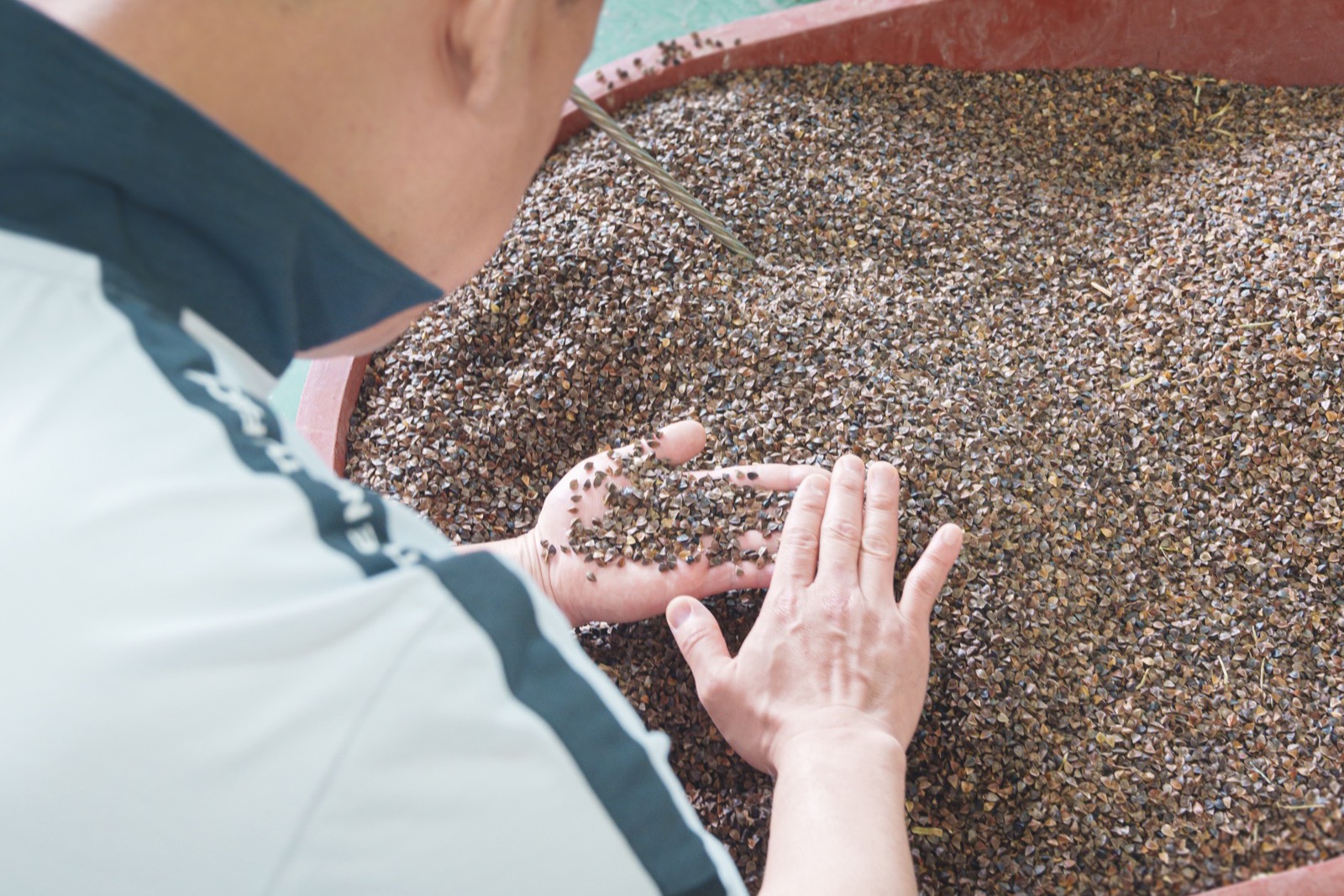
Not all buckwheat carries the same taste and aroma. Common buckwheat, the kind we eat most often, is soft and nutty, while tartary buckwheat has the faintly bitter taste its name suggests, a deeper aroma and a character of its own. We build on common buckwheat from Jeju and blend in 5–10% tartary buckwheat to make our 100% buckwheat noodles. Using the different qualities of the two buckwheats to make the aroma and flavor of a 100% buckwheat noodle a little clearer is the reason for this blend.
Common Buckwheat for Softness, Tartary for Definition
The base of our 100% buckwheat noodles is common buckwheat. Add tartary buckwheat on top of the gentle aroma and nutty taste that common buckwheat gives, and the scent, the color and the flavor of the buckwheat all come out a little more sharply.
Let the proportion of tartary buckwheat rise too high, though, and its bitterness can grow strong. So we blend within a 5–10% range, adding the character of tartary buckwheat without spoiling the softness of the common buckwheat.
Rutin, Abundant in Tartary Buckwheat
Another feature of tartary buckwheat is rutin. Rutin is a flavonoid found in buckwheat, well known as an antioxidant. Tartary buckwheat in particular holds far more rutin than ordinary common buckwheat. The most important reason we use tartary buckwheat is the taste and aroma of the noodles, but the fact that the two buckwheats differ in their nutritional make-up is another interesting thing about it.
5–10% Is Not a Fixed Number. Buckwheat Is a Crop
Even buckwheat from the same region varies a little in aroma and taste according to when it was harvested, how the year's crop turned out and the condition of the grain. Rather than mixing tartary buckwheat at the same proportion no matter what, we adjust the blend within the 5–10% range according to the state of the buckwheat we are using that day. Keeping to the number in a recipe matters less than looking at the actual grain and drawing a good flavor out of the noodles.
A Good Blend Leads to Good Noodle Making
Getting the proportion of common and tartary buckwheat right does not finish a good noodle on its own. We mill the two buckwheats finely on a millstone every morning and draw them into noodles within three hours, so the aroma of the buckwheat stays. Careful noodle-making then gives a noodle that is 100% buckwheat and still has a measured spring and a firm bite. From choosing the grain to the blend, the milling and the noodle-making. A good buckwheat noodle, as we see it, is finished by all of these steps running together.
Frequently Asked Questions
- How are common and tartary buckwheat different?
- Common buckwheat is soft and nutty, while tartary buckwheat carries a deeper aroma and a faintly bitter character of its own. Tartary buckwheat is also rich in rutin, known as an antioxidant.
- Does tartary buckwheat make the naengmyeon bitter?
- We build on common buckwheat and blend tartary buckwheat in a 5–10% range. It is the proportion that keeps the bitterness from standing out while making the aroma and flavor of the buckwheat clearer.
- Are Seogwanmyeonog noodles 100% buckwheat?
- Yes. We blend common and tartary buckwheat, but both are grown on Jeju and the noodles are 100% buckwheat.
References
- Seogwanmyeonog menu stories (/en/story)
- Mention of the Seogwanmyeonog blend in a Pyeongyang Naengmyeon feature (Kyunghyang Shinmun, July 2025)